


Revêtement lisse de fil PTCA
-
 2021-07-14
-
LEPU


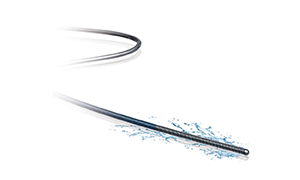
Le fil 1. PTCA a besoin du traitement de revêtement
Le but du revêtement de fil PTCA est de réduire le frottement du fil guide, d'améliorer le suivi et de faciliter la livraison de l'équipement. Le matériau de revêtement doit avoir des propriétés chimiques stables, une bonne biocompatibilité et un effet anti-thrombotique. Selon ses caractéristiques, il peut être divisé en deux types: hydrophile et hydrophobe.
Les revêtements hydrophobes les plus couramment utilisés sont le polytétrafluoroéthylène, la dihydrofluorescéine et la résine de silicone; les revêtements hydrophiles comprennent les polymères Hydro-track, Hydro-coat et M-Coat VR.
The hydrophilic coating is a thin layer of matte substance in the dry state, which absorbs water molecules to form a smooth gel-like surface and reduce the friction of the Fil PTCA.
Le revêtement hydrophobe repousse les molécules d'eau et rend la surface lisse et cireuse, ce qui réduit également le frottement sur la surface du fil de guidage et améliore le suivi.
2. revêtement hydrophile de fil de PTCA et fil de guide hydrophile
Il convient de noter qu'il existe des différences conceptuelles entre les revêtements hydrophiles et les fils de guidage hydrophiles (également appelés fils de guidage super lisses). Tous les fils PTCA avec des revêtements hydrophiles ne peuvent pas être appelés fils de guidage hydrophiles.
The common feature of the hydrophilic guide wire is a smooth polymer sheath. The polymer sheath covers the head end of the guide wire or the entire guide wire. The outer surface of the sheath is coated with hydrophilic coating, so that the smoothness of the Fil PTCA is further improved, which makes it easy to find the microchannel in the occluded lesion and pass through the micropore with less resistance, thereby increasing the success rate of intervention of CTO lesions. This feature makes hydrophilic guide wires often used in combination with non-hydrophilic rigid guide wires. In addition, the polymer sheath and smooth coating also make it difficult to maintain the shape of the guide wire head end, which increases the complexity of the operation.